

Photo by Luke Heibert on Unsplash
The packaging trends defined by 2026 are substantiated sustainability (verified, evidence-backed environmental claims rather than vague “eco-friendly” labeling), smart/connected packaging (QR codes, NFC chips, and digital product passports), minimalist “quiet luxury” design, and — the shift fewest brands have acted on yet — premium rigid-box packaging with magnetic-flap closures moving into pet-care products, a category still dominated by bright, mass-market-coded boxes. Most 2026 packaging trend coverage stops at the first three because they’re the ones large industry bodies and material suppliers are tracking. The fourth is where a genuine, currently-open opportunity sits for brands willing to move before the rest of the category does.
If you’re a founder or brand manager who searched “packaging trends 2026” to get oriented before briefing a manufacturer, this is written from the manufacturing side — we’re Zenvista Packagings, and we’re seeing which of these trends are actually showing up in real production briefs versus which ones are still mostly industry-conference talk. We’ll cover the big four trends briefly, then go deep on the one — premium pet-care packaging — that’s concrete enough right now to act on.
What Are the Biggest Packaging Trends in 2026?
The five packaging trends defined by 2026 are: (1) substantiated sustainability — environmental claims that must now be backed by verifiable data rather than marketing language, (2) smart and connected packaging — QR codes, NFC chips, and digital product passports built into the pack itself, (3) minimalist “quiet luxury” design — restrained neutral palettes and tactile finishes like blind debossing replacing loud branding, (4) accessible and inclusive design — ergonomic openings and legible, higher-contrast labeling, and (5) premium pet-care packaging — rigid boxes, magnetic-flap closures, and matte finishes moving into a category that has historically used mass-market packaging. The first four are well-covered elsewhere; the fifth is the one with the most room to move first.
Substantiated Sustainability: Why “Eco-Friendly” Now Needs Proof

Photo by Ochir-Erdene Oyunmedeg on Unsplash
Substantiated sustainability means environmental claims on packaging now have to be backed by verifiable, measurable data — recyclability rates, material sourcing certifications, carbon figures — rather than a general “eco-friendly” or “green” label. Regulatory pressure (frameworks like the EU’s Packaging and Packaging Waste Regulation) and consumer skepticism toward greenwashing are pushing this from a nice-to-have into a compliance and trust requirement at the same time.
In practice, this shows up as:
- Mono-material design — packaging built from a single recyclable material (rather than mixed plastics/laminates) because mixed materials are harder to actually recycle at scale, regardless of what the label claims.
- Fiber-first structures — designing the pack around paper/pulp fiber as the default substrate, adding plastic or coating only where genuinely necessary, instead of the reverse.
- Carbon and recyclability labeling — printing verifiable lifecycle data directly on-pack, not just a recycling symbol.
For Zenvista’s own clients, this mostly affects material selection conversations at the quoting stage — FSC-certified board, mono-material closures, and recycled-content percentages need to be part of the initial brief, not a late add-on, which is the same guidance we give for sustainable fragrance packaging specifically (see our quiet luxury packaging design guide for how this intersects with premium aesthetics).
Smart & Connected Packaging: QR Codes, NFC, and Digital Product Passports
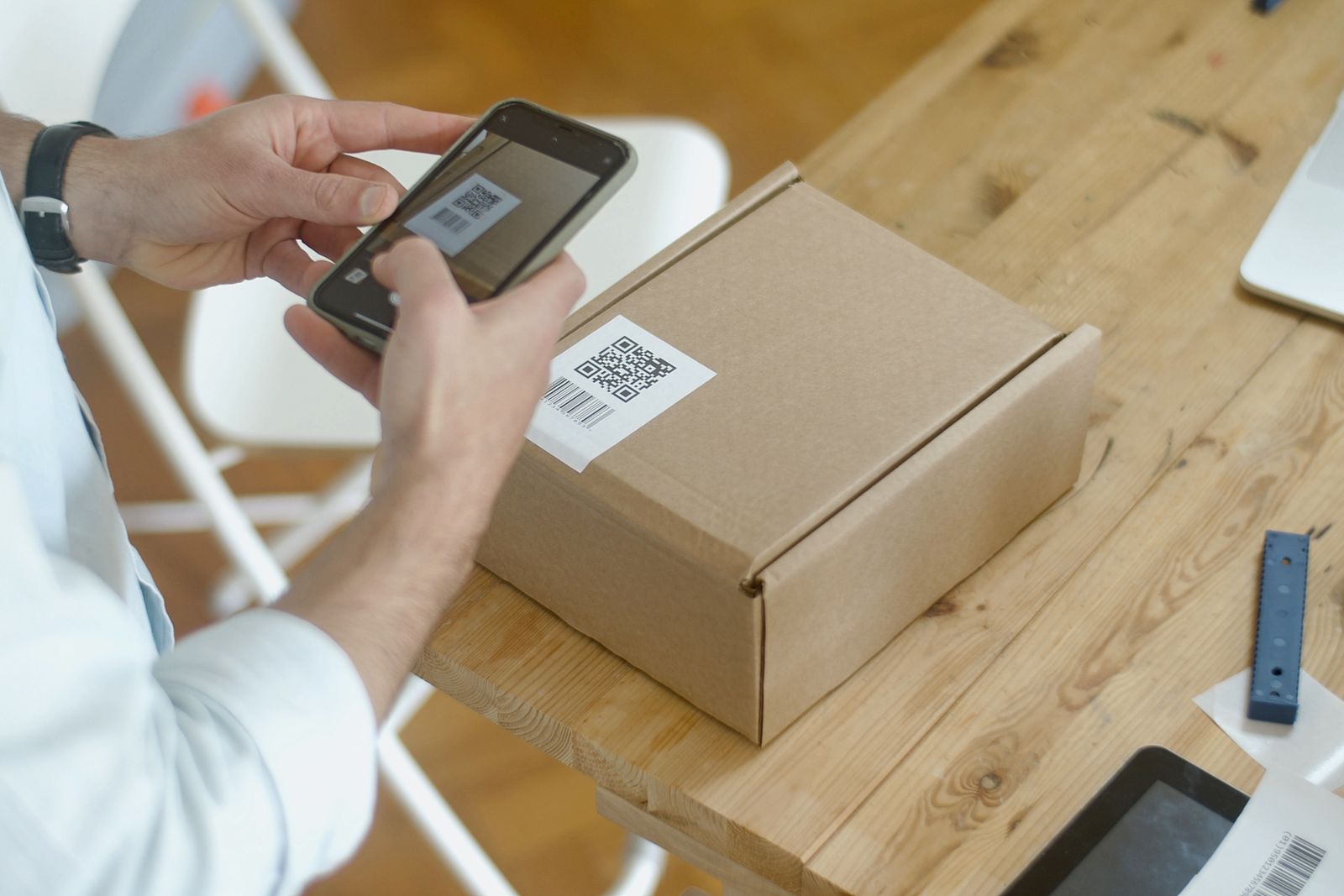
Photo by Kampus Production on Pexels
Smart packaging embeds a digital layer into the physical pack — QR codes, NFC chips, RFID tags, or AR triggers — that connects a product to traceability data, authenticity verification, or an interactive brand experience the moment it’s scanned. This has moved from a novelty add-on to a functional expectation in categories where counterfeiting, cold-chain integrity, or post-purchase engagement matter.
The most common current uses:
- Digital product passports — a scannable record of a product’s material sourcing, manufacturing, and end-of-life recycling instructions, increasingly required rather than optional under emerging packaging regulation.
- NFC-based authentication — used heavily in premium fragrance and cosmetics to combat counterfeiting and to open a direct post-purchase engagement channel (loyalty, refill ordering, usage tutorials) without adding printed copy to the box itself.
- Condition-monitoring smart labels — QR-linked temperature/humidity indicators, most relevant to categories with cold-chain or shelf-life sensitivity.
This is a real trend, but it’s also the one most likely to be over-applied — a chip or code only earns its cost if there’s a genuine reason for a customer to scan it. For most of Zenvista’s product categories (perfume bottles, skincare jars, airless bottles, pet containers), the stronger near-term move is the premium pet-care shift below, not adding a digital layer to categories that don’t yet have a clear use case for one.
Minimalist “Quiet Luxury” Design — Still Current, Covered in Depth Elsewhere
The shift toward restrained, neutral-palette packaging with tactile finishes like blind debossing and soft-touch matte coating — replacing bold logos and high-gloss lamination — remains one of the most consistently cited 2026 packaging trends, especially in fragrance, skincare, and now premium pet-care lines. We’ve already written the full breakdown of this trend, including finish comparisons, substrate requirements, and how to brief a manufacturer for it: Quiet Luxury Packaging Design: The Blind Debossing, Soft-Touch Matte, and Neutral-Palette Playbook. If restrained, tactile-first design is the trend you’re researching, that piece is the deeper resource — this one won’t repeat it.
Accessible and Inclusive Packaging Design
Accessible packaging design means structuring openings, labeling, and grip points so a product is usable by people with a wider range of physical ability and vision — larger easy-turn caps, high-contrast legible type, tactile markers for identification without sight, and one-handed-operable closures. This has grown from a niche accommodation into a mainstream design input, partly regulatory (label legibility requirements) and partly because ergonomic packaging measurably reduces returns and complaints across the whole customer base, not just for the population it was originally designed for. It’s a lower-priority item for most of Zenvista’s current briefs, but worth flagging at the design stage for any client whose packaging involves a twist cap, pump, or small-print ingredient panel.
The Premium Pet-Care Packaging Shift: Rigid Boxes and Magnetic Closures

Photo by Packhelp on Unsplash — representative rigid-box packaging, not a pet-specific product photo.
This is the trend with the most immediate opportunity, and it’s the one still-largely-unclaimed by the broader “packaging trends 2026” content already ranking — most of that coverage is written by sustainability bodies and material suppliers talking about packaging in general, not by anyone looking specifically at where pet-care packaging is headed.
What is rigid box packaging for pet products?
Rigid box packaging for pet products is a shift away from lightweight folding cartons and mass-market retail bags toward the same sturdy, structured boxes historically used for jewelry, electronics, and premium cosmetics — typically an 800-1500gsm chipboard or greyboard core wrapped in a premium outer material, built to hold its shape rather than collapse flat. Pet brands have historically used the cheapest packaging format that would survive shipping, on the assumption that pet-product buyers weren’t paying attention to box quality the way skincare or fragrance buyers were. That assumption is now out of date.
Why are pet brands switching to magnetic-flap closures?
Pet brands are adopting magnetic-flap closures because they replicate the “premium unboxing” moment already established in cosmetics and fragrance packaging, at relatively low incremental cost compared to redesigning the box structure itself — a magnetic closure signals a considered, gift-worthy product rather than a functional container, and pet owners are increasingly treating a product’s packaging as a proxy for the product’s quality, the same shift that happened in skincare and fragrance several years earlier. A magnetic-flap rigid box also reduces reliance on tape or adhesive closures, which improves both the unboxing experience and repeat-use appeal for treat tins, toy boxes, or subscription-style pet product lines meant to be reused rather than discarded.
What finishes pair with rigid pet packaging?
Matte or soft-touch coating over the rigid structure is the most common pairing right now — the same tactile logic driving the quiet luxury trend in fragrance and skincare, applied to a category that hasn’t widely adopted it yet. A restrained neutral or muted palette (rather than the bright, high-saturation color mass-market pet packaging defaults to) reinforces the same premium signal.
Standard vs. Premium Pet Product Packaging
| Standard/mass-market pet packaging | Premium pet packaging (2026 direction) | |
|---|---|---|
| Structure | Folding carton, poly bag, or thin corrugate | Rigid box, 800-1500gsm chipboard/greyboard core |
| Closure | Tape, adhesive flap, tuck-in | Magnetic flap, ribbon pull |
| Surface finish | Gloss print, bright saturated color | Matte/soft-touch coating, muted or neutral palette |
| Perceived signal | Functional, disposable | Considered, gift-worthy, reusable |
| Best fit | High-volume commodity items (bulk treats, litter) | Toys, treat tins, subscription boxes, gifting-occasion product lines |
| Cost driver | Print run volume | Board weight + closure hardware, not print complexity |
How to Choose Which 2026 Packaging Trend Is Worth Adopting for Your Brand
- Don’t chase all five trends at once. Sustainability compliance is close to mandatory regardless of category; smart packaging and accessibility are worth adopting only where there’s a genuine use case; quiet luxury design and premium pet packaging are aesthetic/positioning bets that should match where your category’s buyer expectations are actually moving.
- If you’re in fragrance, skincare, or cosmetics, the quiet luxury shift is already mainstream enough that it’s closer to a baseline expectation than a differentiator — see the dedicated guide linked above for how to brief it.
- If you’re in pet-care, the rigid-box/magnetic-closure shift is still early enough to be a genuine differentiator rather than table stakes — most competitors in this category are still using standard folding-carton or poly-bag packaging, which is exactly why moving now matters more than moving on quiet luxury does for a fragrance brand at this point.
- Confirm board weight and closure hardware sourcing before finalizing artwork, the same rule that applies to blind debossing — a magnetic closure and rigid structure both have to be specified before tooling, not adjusted after a first production run comes back too light to hold its shape.
- Ask for a physical sample, not a digital mockup, for the same reason soft-touch coating needs to be felt rather than seen on screen — a rigid box’s structural rigidity and a magnetic closure’s snap-shut feel are both things a rendering can’t accurately convey.
FAQ
What are the biggest packaging trends in 2026?
Substantiated sustainability (verified environmental claims), smart/connected packaging (QR codes, NFC, digital product passports), minimalist “quiet luxury” design, accessible/inclusive design, and a premium pet-care packaging shift toward rigid boxes and magnetic closures.
What is rigid box packaging for pet products?
A sturdy, structured box format (typically 800-1500gsm chipboard or greyboard core) replacing lightweight folding cartons or poly bags for pet products, built to hold its shape and signal a considered, gift-worthy product rather than a purely functional container.
Why are pet brands using magnetic closures now?
Magnetic-flap closures create the same “premium unboxing” moment already standard in cosmetics and fragrance packaging, at relatively low added cost, and pet owners are increasingly reading packaging quality as a signal of product quality the way skincare and fragrance buyers already do.
Is sustainable packaging still a top 2026 trend?
Yes — it’s arguably the most universal 2026 trend, but the bar has moved from claiming sustainability to proving it with verifiable material sourcing, mono-material design, and measurable recyclability data, driven by both regulation and consumer skepticism toward greenwashing.
Do smart packaging features like QR codes and NFC chips make sense for every product?
No — they’re most justified where there’s a genuine use case (authentication, cold-chain monitoring, digital product passport compliance). Adding a digital layer without a clear reason for a customer to use it is a cost without a corresponding benefit.
How is premium pet packaging different from quiet luxury fragrance/skincare packaging?
The finishing logic (matte coatings, restrained palettes, tactile materials) is similar, but the structural shift for pet-care is centered on rigid-box construction and magnetic closures rather than the finer surface techniques (blind debossing) that dominate fragrance and skincare, and pet-care is earlier in adopting the trend than either of those categories.
Zenvista Packagings manufactures airless bottles, jars, perfume bottles, and pet-care containers, and is currently briefing rigid-box, magnetic-closure pet packaging alongside our existing quiet-luxury fragrance and skincare finishing work. If you’re specifying a premium pet product line and want to talk through structure, closure hardware, and finish options, get in touch.
