

Photo by pmv chamara on Unsplash
Cosmetic packaging in 2026 is best understood as three layers working together, not three separate purchases: the bottle and its cap/closure (primary packaging, in direct contact with the product), the mono carton (the individual product’s everyday printed retail carton), and the rigid gift box (a premium secondary option reserved for hero SKUs, gift sets, and limited editions). The trend brands keep missing isn’t a single material or finish — it’s treating these three decisions as one system instead of three separate vendor conversations, which is where cost, brand consistency, and shelf impact all tend to fall apart.
If you’re a founder or brand manager researching cosmetic packaging before a production run, this covers what’s actually changing in each layer this year — glass vs. PET/HDPE bottles, the closure details that matter more than they used to, mono carton styles and finishes, and when a rigid gift box earns its higher cost — and how to think about all three together rather than optimizing one in isolation.
How Cosmetic Packaging Layers Work Together
Cosmetic packaging is generally split into primary packaging (the bottle, jar, or tube and its cap or closure — the part that touches the product) and secondary packaging (the printed packaging built around it — either a mono carton, the individual product’s everyday retail carton, or a rigid gift box, reserved for premium and gift SKUs). A third layer, tertiary packaging (shipping cartons, pallets), exists further down the supply chain but isn’t a brand-facing design decision the way the first two are, so it’s outside the scope of what most brands are actually specifying.
The reason this framing matters: most packaging research happens one layer at a time — “which bottle,” then separately “which box” — when the actual brief should move in the other direction. A bottle’s shape and cap height determine what a mono carton or rigid box needs to fit around it; a brand’s decision to run a gift-set SKU changes the closure spec (magnetic-flap boxes handle differently than shelf cartons); and glass versus PET changes both weight (shipping cost) and how a box needs to cushion the product inside it. Specifying all three together, even if they’re sourced from one manufacturer, avoids the redesign-after-the-fact problem that comes from picking a bottle first and discovering the box doesn’t work with it later.
Cosmetic Bottle Trends in 2026: Glass, PET, HDPE, and the Closures That Matter

Photo by Benjamin Ngo on Unsplash
Should a cosmetic brand use glass or plastic bottles in 2026?
Glass is the stronger choice for prestige positioning and for formulations sensitive to plastic leaching, while PET and HDPE remain the stronger choice for cost, shipping weight, and shatter-resistance — most brands end up using both across their line rather than picking one material for everything. Industry data through 2026 shows a real swing toward glass at the premium end (several sources cite a large majority of premium beauty brands stating plans to shift plastic SKUs to glass), driven by glass reading as higher-quality and being infinitely recyclable without the material degrading. But that swing hasn’t eliminated plastic — PET and HDPE still dominate lotions, toners, shampoos, and any high-volume SKU where a bottle can weigh 80-90% less than its glass equivalent, which matters directly for shipping cost at scale.
| Glass | PET | HDPE | |
|---|---|---|---|
| Best for | Prestige/serum SKUs, sensitive formulations | Clear-bottle lotions, toners, high-volume SKUs | Opaque bottles — shampoo, cleanser, thicker emulsions |
| Weight/shipping cost | Heaviest, highest shipping cost | Lightest, lowest shipping cost | Light, low shipping cost |
| Recyclability | Infinitely recyclable, no quality loss | Recyclable, degrades slightly per cycle | Recyclable, one of the more widely accepted plastics curbside |
| Formulation safety | Inert — won’t react with contents | Generally safe, some sensitivity to certain actives/oils | Generally safe, good barrier for opaque/thicker formulas |
| Perceived positioning | Premium, “heft sells quality” | Mid-market to premium-adjacent, especially when clear and well-shaped | Functional, mass-to-mid-market |
What closures and caps are trending for cosmetic bottles in 2026?
The closure is doing more brand-perception work in 2026 than it used to — the specific feel of a magnetic lid snapping shut, a precisely threaded cap, or a well-weighted pump has become a deliberate sensory design choice, not just a functional afterthought. Alongside that sensory shift, three practical trends are shaping closure specs:
- Simplified internal components — pumps, springs, and multi-material actuators are the hardest part of a bottle to recycle, so brands and manufacturers are trending toward simpler, more mono-material closure mechanisms where the formulation allows it.
- Swap/refill-ready closures — closures designed to be reopened and refilled (rather than single-use) are showing up more in premium skincare and fragrance, tying the closure spec to a refill or subscription model rather than treating the bottle as fully disposable.
- Weight and resistance as a deliberate spec — brands are increasingly telling manufacturers the exact turn-resistance or snap-weight they want a cap to have, the same way they’d specify a color — it’s now a brief item, not something left to a manufacturer’s default tooling.
Mono Carton Trends: The Printed Carton for Each Individual Bottle, Jar, or Tube

Photo by Giorgio Trovato on Unsplash
What is a mono carton in cosmetics packaging?
A mono carton is a single-layer folding carton — usually 250-300gsm paperboard — that individually packages one cosmetic bottle, jar, or tube, printed with the brand’s design and the product information a shopper reads at shelf: ingredients, claims, and barcode. It’s the individual carton nearly every cosmetic SKU is sold in at retail by default, distinct from a rigid box (below) in that it collapses flat for storage before being erected around the product, rather than holding a fixed rigid shape — which is exactly what makes it the cost-efficient, high-volume choice.
The common structural styles worth knowing before a brief:
- Straight tuck end — the simplest, most economical fold, tuck flaps close in the same direction; the default for most single-SKU cosmetic cartons.
- Reverse tuck end — flaps tuck in opposing directions, slightly more secure and common in personal care and healthcare-adjacent beauty products.
- Sleeve and tray — an outer sleeve slides over an inner tray, giving a two-motion opening that reads as more premium than a straight tuck end without the cost of a full rigid box.
- Windowed carton — a die-cut window (often with a clear film insert) lets the product show through, common for makeup and color cosmetics where the product itself is part of the sell.
What’s trending in mono carton finishing right now?
Board choice is doing more brand-signaling work than print alone: 300gsm white board reads as a crisp, clean, mass-premium default, while 250gsm kraft board is the current shorthand for “natural/eco-conscious,” even before a customer reads a single sustainability claim. Matte lamination continues to outpace gloss as the default finish across skincare and personal care mono cartons, for the same tactile-premium reason it’s winning in every other packaging layer this year — and minimalist, type-forward print (rather than dense graphic panels) is the dominant look on the highest-performing cosmetic carton designs currently in market.
Rigid Gift Boxes: When a Cosmetic Brand Actually Needs One
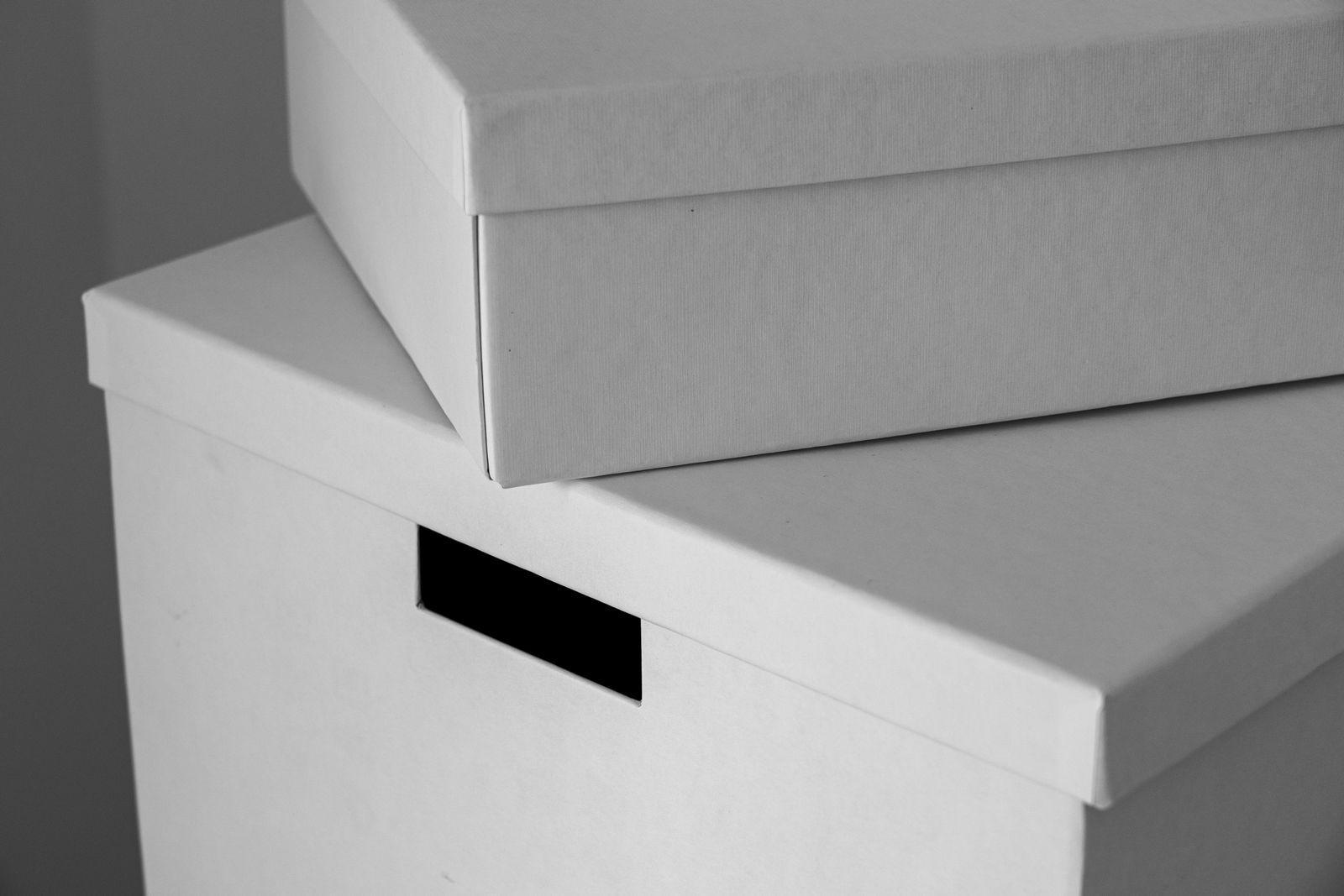
Photo by Castorly Stock on Pexels
What’s the difference between a mono carton and a rigid box?
A rigid box (also called a set-up box — the two terms are used interchangeably in the packaging industry) is a non-collapsible structure built from thick chipboard — typically 800gsm or heavier — wrapped in a premium outer material, unlike a mono carton, which folds flat from a single printed sheet. That structural difference is also the cost driver: a rigid box requires its own tooling and assembly process and generally costs several times more per unit than a mono carton, which is why it’s a deliberate upgrade for a specific subset of SKUs rather than a brand’s default packaging.
Is “rigid box” the correct term, or is it really a “gift box”?
“Rigid box” and “set-up box” are the packaging industry’s actual technical terms for this non-folding construction — “gift box” is a common consumer-facing description tied to its most visible use case, not a distinct industry category. Within that umbrella term, manufacturers further distinguish rigid boxes by structural style, and the style someone has in mind when they say “gift box” is usually one specific one of these:
- Two-piece box — the simplest and most traditional configuration: a separate base and a lid that lifts straight off, not attached by a hinge or fold. “Two-piece” refers only to this lid-and-base structure, not to materials or finish.
- Telescoping box — a variation on the two-piece structure where the lid is deeper and slides down to fully or partially encase the base, creating a snugger, more resistant fit than a simple lift-off lid.
- Book-style (magnetic) box — a hinged lid attached to the base along one edge, opening like a hardcover book, typically held shut by a magnetic closure on the front flap rather than lifting off entirely. This is the structure most people are actually picturing when they picture a “gift box” with a magnetic snap-shut lid.
All three are rigid boxes / set-up boxes in industry terminology — the difference between them is how the lid attaches and opens, not whether they qualify as “rigid.”
| Mono carton | Rigid box | |
|---|---|---|
| Structure | Folds flat, single-layer paperboard | Fixed shape, thick chipboard core (800gsm+) |
| Cost per unit | Low | Several times higher than a mono carton |
| Best fit | Standard retail SKUs, high-volume everyday packaging | Gift sets, hero/flagship SKUs, limited editions, subscription “premium reveal” boxes |
| Closure options | Tuck flap, adhesive | Lift-off lid (two-piece), slide-down lid (telescoping), or magnetic flap (book-style) |
| Typical finish | Matte or gloss lamination, standard print | Soft-touch matte, foil stamping, embossing, custom foam/insert trays |
Why do brands upgrade to a rigid box instead of just using a better mono carton?
A rigid box earns its cost premium specifically where the unboxing moment itself is part of what’s being sold — gift sets, a flagship product a brand wants to visually separate from the rest of its line, or a limited-run collaboration where perceived value needs to justify a higher price point. Using a rigid box across an entire product line, rather than reserving it for these cases, usually isn’t a good trade — most of a brand’s volume is better served by a well-designed mono carton, with the rigid box held in reserve as the format that makes the highest-margin or most gift-driven SKUs feel distinct. (For the specific finishing techniques — blind debossing, soft-touch matte coatings, the neutral “quiet luxury” palette — driving rigid box design in fragrance and skincare right now, see our dedicated breakdown of that trend.)
How to Decide: What Goes Where
- Start with the bottle, not the box. Bottle shape, cap height, and material (glass vs. PET/HDPE) determine what both the mono carton and any rigid box need to be built around — specifying the box first and fitting the bottle to it later is the most common source of costly redesigns.
- Default every SKU to a mono carton. It’s the economically correct choice for the large majority of a product line, and matte lamination plus a considered board choice (kraft vs. white) does most of the perceived-quality work at this tier.
- Reserve the rigid box for SKUs where the unboxing is part of the pitch — gift sets, hero products, limited editions — rather than defaulting to it across an entire catalog.
- Match the closure to the use case, not just the bottle. A refill-ready or magnetic-feel closure is worth the spec conversation for a flagship serum; it’s usually not worth it for a high-volume, low-price SKU.
- Brief all three layers to your manufacturer together, even if you’re deciding on them separately — the fit between bottle, carton, and any rigid box is what a single conversation catches early and three separate conversations tend to miss.
FAQ
What is the difference between primary and secondary packaging in cosmetics?
Primary packaging is the container in direct contact with the product — a bottle, jar, or tube and its cap or closure. Secondary packaging is the printed packaging around it — either a mono carton (the individual product’s everyday retail carton, cost-efficient) or a rigid gift box (premium, reserved for specific SKUs).
Should I use glass or plastic bottles for my cosmetic line?
Glass suits prestige positioning and formulations sensitive to plastic, while PET and HDPE suit cost-sensitive, high-volume, or shatter-risk applications — most brands use both across different SKUs rather than choosing one material for an entire line.
What is a mono carton?
A single-layer folding carton, usually 250-300gsm paperboard, that individually packages one cosmetic bottle, jar, or tube — printed with the brand’s design and product information — and folds flat for storage before being erected at the point of packing. It’s the default, cost-efficient retail carton for most cosmetic products.
What’s the difference between a mono carton and a rigid box?
A mono carton folds flat and is made from a single printed paperboard sheet; a rigid box is a non-collapsible structure built from thick chipboard (800gsm+) that holds its shape permanently. Rigid boxes cost significantly more and are reserved for gift sets, hero SKUs, and limited editions rather than everyday packaging.
What closures are trending for cosmetic bottles in 2026?
Sensory-driven closure design (the specific feel of a magnetic lid or precisely threaded cap), simplified mono-material internal components for recyclability, and refill-ready closures tied to subscription or refill programs.
Do I need a rigid box for my cosmetic packaging?
Only for specific SKUs — gift sets, flagship products, or limited editions where the unboxing experience is part of the value proposition. Most of a product line is better served by a well-specified mono carton.
If you’re specifying bottles, caps and closures, mono cartons, or rigid gift boxes for a cosmetic line and want to think through how the three fit together, Zenvista Packagings is worth a look for that conversation.
